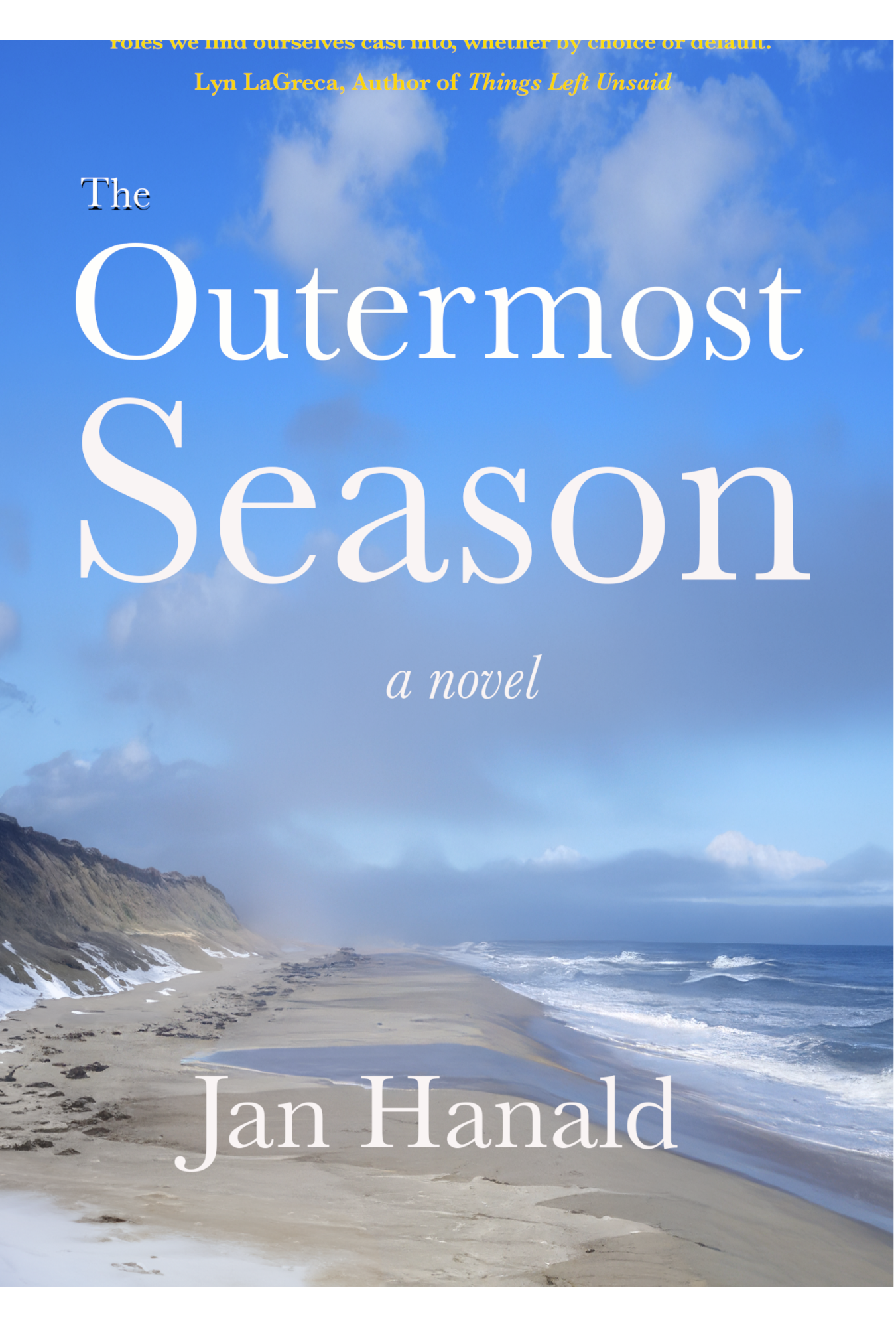
The Outermost Season
During the coldest weeks of winter on the Outer Cape, when the year-rounders are hunkered down and trying to stay sane, the towns of Wellfleet and Provincetown might as well be islands north of the Arctic Circle...
Ever-dependable Elsie Bigelow has arrived on a fool’s errand. Pressed by her family in Maine to keep an eye on her dangerously beautiful brother, she has taken a job at a bookstore that involves fronting for the owner’s affairs.
Her life on indefinite hold, Elsie is frustrated and lonely––until a chance encounter with Viveka von Loftenburg, a Swedish Baroness and former starlet of 1970s Italian vampire movies. Vivacious, generous, and altogether outrageous, Viveka is far more cultured than her films would suggest. At turns mystified and fascinated, Elsie jumps into the older Viveka’s welcoming orbit, taking her first steps toward a creative education that stirs long-deferred instincts, but will it be a relationship with a crazy aunt, an artistic mentor or a life-altering love?

“When we took up the challenge posed by the original Provincetown Bookshop to come up with a novel set on the Outer Cape, we were more than aware that the task was a fraught proposition. But we immersed ourselves in stories told by old friends and relatives much closer to the cultures depicted. We made a list of elements to be touched upon, namely: the instinct to find love, community and creative expression amidst the grinding isolation, limited means, and pervasive addictions––all of which are explored further in The Outermost Year. But also the essential outrageousness of P-Town had to be present, even in the coldest patch of the year––hence Viveka von Loftenburg.
As for Hrefna Elsie Bigelow, the novel’s heart and soul, the decision to make her half-Icelandic (and that much more of an outsider) dates back to the original 1999 film project Off Season, where her character as well as Joe, Claire, and Dean’s first emerged. Many of the collaborators on the film were from Scandinavia, including the Icelander Elin P., who was originally going to play Elsie and managed a Maine accent better than most of the American actors in New York. The original Icelandic collaborators are no longer available, but their influence remains––fine-tuned with the help of Olöf Petursdóttir in France.”
Doc Crane
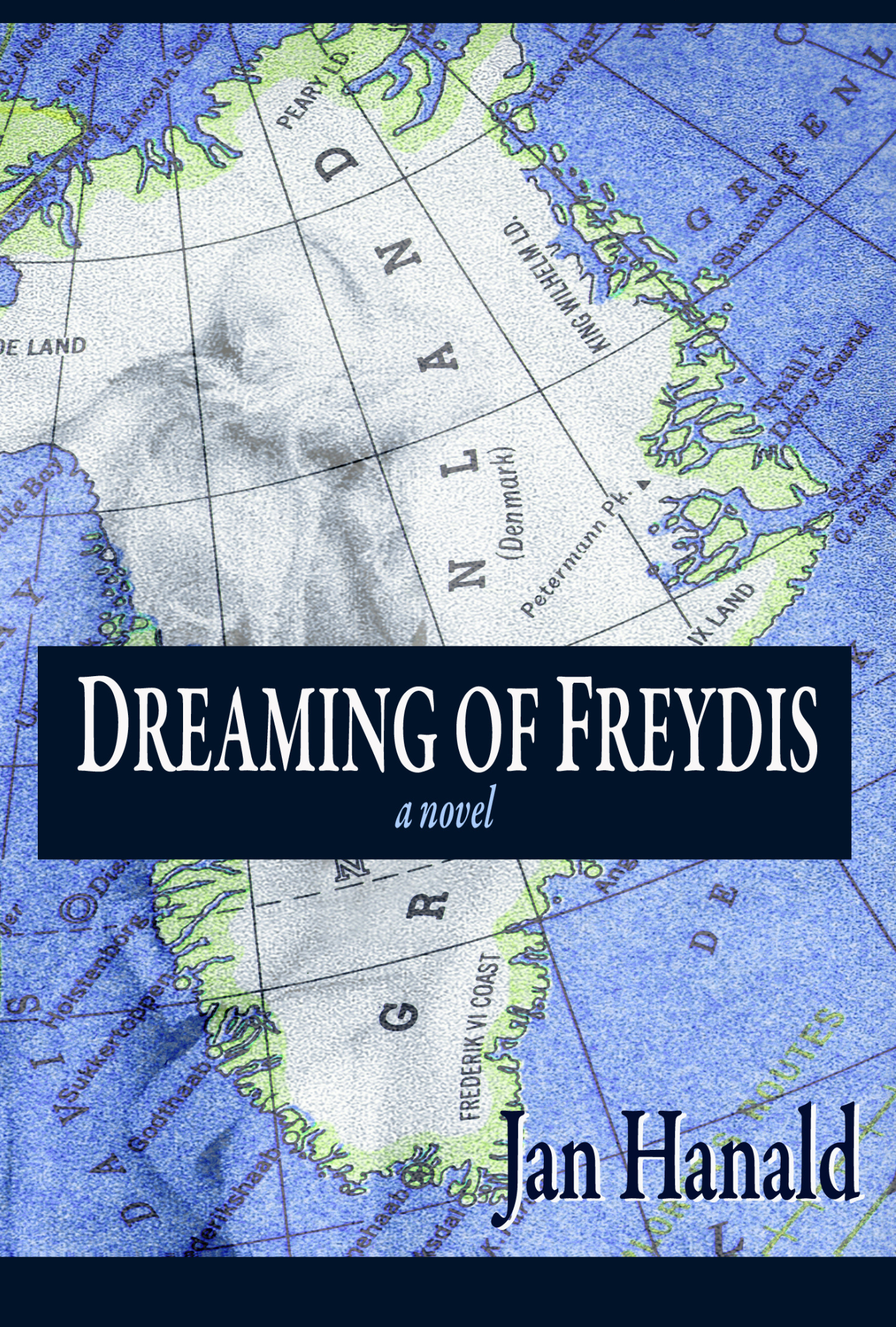
Dreaming of Freydis
WHAT MAKES A MYTH?
And how do those myths in turn shape us, sustain us, and sometimes prove to be our undoing?
These are the questions at the heart of DREAMING OF FREYDIS, a novel about two very different cousins from a gifted Danish family with a knack for re-invention and some hard memories of the Nazi Occupation.
Holly S. is a minor legend among the post-grads of late ‘90s Harvard Square. Soulful and cerebral, but without credentials in academia or the arts, her attempts at starting a creative career and being a flamboyant “Dane of her own making” have left her dismissed as an eccentric ex-pat. Holly falls back on her ongoing research on Leif Eiríksson’s heroically villainous sister Freydis––a lifelong fascination passed down from her uncle Karl, a renowned in-vitro pioneer and amateur archeologist who once practiced in Greenland.
Shadowing Holly is the recent success of her younger, Americanized cousin, Winnie. Tough and cocky, Karl’s daughter is in every way Holly's opposite, having evolved from a prep-school terror to a promising mountaineering and extreme sports star. But when a climbing expedition in Antarctica ends in disaster, forcing Winnie to make a ruthless decision, everything changes. Confronted with her notoriety, Winnie takes a recuperative corporate job in Greenland developing an alpine resort. Upon returning to her father’s old territory, Winnie turns inward, becoming obsessed with evidence that suggests an unnerving link between herself and Freydis.
It falls to Holly to sort out the truth and bring her cousin home, however she soon finds that Winnie’s feverish claims shroud wartime family secrets far darker than either of them could ever imagine.


Reading by Charlotte Sutherland
Nightfolk
Which is more frightening– Gothic Genre or a History of the Twentieth Century?
–because compared to the likes of Hitler or Stalin, Dracula might as well have been a quaint, country squire with a few fetishes…
While residing at an Adirondacks hotel in the winter of 1930, the socialite occultist and political intriguer W.A. Richardson surmised the existence of an ancient, preternatural people imbued with pervasive memories and vampiric proclivities. Describing them in his journal as “Travelers,” Richardson would witness the disappearance of Emily, a chambermaid who returns transformed, prompting a calamitous reaction from her husband Jack.
Fifty years later, disenchanted graduate student Fran Avery encounters a still youthful Emily. Drawn into her memories, Fran glimpses a legacy reaching back across the centuries to Medieval Scandinavia——beginning a metamorphosis of her own. Watched over by an aged, seething Jack, Fran contrives to find a way beyond her newfound instincts, her conscience retreating into past experiences and events where she soon gleans the costs of transcendence and redemption.
In the Magical Realist traditions of The Master and Margarita and The Tin Drum, Nightfolk departs from the Gothic genre into the mythic territories of legend and folklore, offering an intimate perspective from within the shadows of history.
Review by Belle Struck– There’s no point in saying that Nightfolk isn’t a vampire novel, but with the exception of one slip of the tongue, the word is never used. The preternatural people at the heart of the story are clearly that, (whether described as “Nättfolk,” or “Travelers,” or even “Nox Viatori,”) but where Ms. Saknusseneouw is offering an expansive and extremely impressionistic historical narrative, vampires with their long lifespans and contagious memories make for a nifty vehicle. Mind you, I’ve never come across any previous nosferatu lore that involved shedding memories, but it’s a flexible metaphor, promising nocturnal locales and predatory glamour, although in Nightfolk the vampires are far less predatory than some of the mortals and movements they come across over the centuries. This is a point made right from the prologue, a journal entry by a boozy old codger named Richardson, whose florid prose style veers between H.G. Wells and H.P. Lovecraft. Sitting out the Depression in an Adirondacks hotel, Richardson sets the story in place, recounting the tale of Emily and Jack, a destitute couple that could be out of a Frank Capra film. When Emily is transformed from a chambermaid into an otherworldly ingénue, her mousy, everyman husband Jack also changes, his puritan instincts curdling with repulsion and desire– turning him into a Paul Bunyan-like recluse.
Transformations abound in Nightfolk. This is clearly where Ms. Saknusseneouw’s fascination lies, for the central character, Fran Avery, is in a process of metamorphosis throughout the novel. Fran starts out a seething upper-middle class WASP who has just ditched her crunchy boyfriend during the summer of 1979. Fran is only too ready to put the liberal seventies behind her. She is craving reaction if not outright tyranny, her instincts aligning with Sylvia Plath’s lament of “women adore a Fascist.”
So when Fran meets a still very-young Emily, and is lured into her universe with it’s invasive memories, she will indeed get to meet Fascists, among them Jack. One can picture Fran evolving into a kind of Ann Coulter if she made it into the Reagan Era–if she stayed on in what the novel calls “the Natural World.” But upon being transformed, Fran passes through a succession of memories and consciences, effectively becoming a time traveler. Along the way, Fran finds a conscience of her own, and tries to forestall morphing any further by becoming a Rip van Winkle.
During her long, long sleep, she glimpses a number of periods, some iconic, such as the French Revolution and the London Blitz, other eras are obscure, involving long-forgotten revolutions, pogroms, and cocktail parties– with the Nightfolk forever watching from the sidelines. A few of the Nightfolk that Fran encounters are indeed quite dangerous, while others are discreetly hapless, or have simply seen too much. More often it’s the mortals of the daylight hours who are out of control, especially Emily’s ancient husband Jack, whose crazed pursuit of redemption over the years assumes monstrous proportions. Jack is a complicated fellow. He starts fires, fights fires, and then embraces a homegrown Fascist group in the early ‘30s only to kill hundreds of Germans when war comes. As hard as Jack tries to purge himself, he can never shake off his attraction for Emily– a fact that Richardson, even as a ghost, repeatedly teases him about.
History, for Ms. Saknusseneouw, seems to be an ongoing process of waking up a relic, no longer relevant, while the people who have stayed on have changed beyond recognition, possessed by events, ideologies, and misguided piety.
The result is a web of mythic tangents, as Nightfolk plays out like a dreamy labyrinth– making for a rather cracked morality tale.

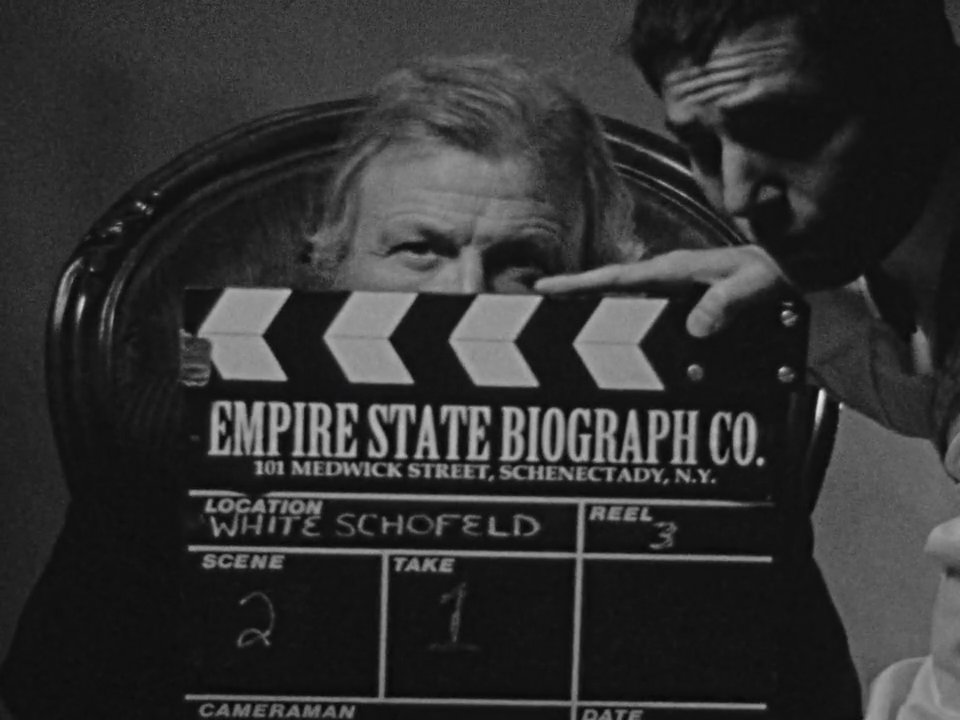
On January 5, 1931, the socialite occultist and political intriguer W. Arthur Richardson sat down for a newsreel interview. It would be the last public record he would offer, drawing from a diary that forms the beginning of NIGHTFOLK.
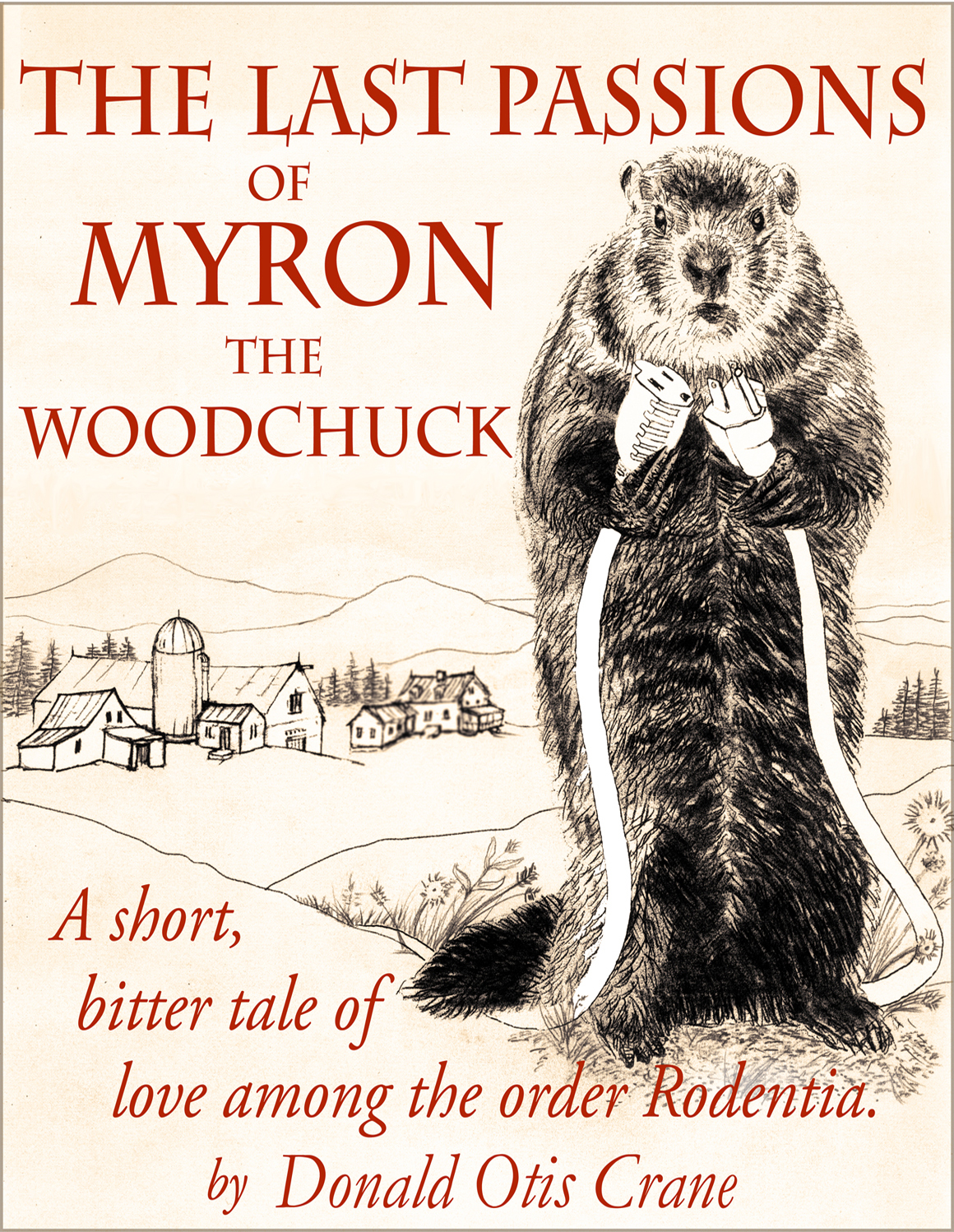
The Last Passions of Myron the Woodchuck
Love is hard in this fable about a Vermont meadow, but it’s much harder when you fall for someone who can devour you…
Although not for children, The Last Passions of Myron the Woodchuck follows in the storytelling traditions of Beatrix Potter, E. B. White, and Shirley Jackson, offering a world of fated romance amidst the plots and schisms of a northeastern animal kingdom.
The Grand Old Man

Playing Santa Claus is no small thing. Never mind the current image of some shabby old man reeking of booze with a five o'clock shadow visible beneath his strapped-on beard. Where I came from just west of Boston, the question of who would represent Saint Nicholas was taken very seriously.
Originally in old Framingham, there was only one department store that had a Santa Claus, Kerwyn's, which was just across from the Kendall Hotel. That was in the twenties. In those days, when the only practical way to Boston or Worcester was by the New York Central railroad, most people stayed in downtown Framingham to do their shopping. Kerwyn's was the premiere establishment, and they went to great lengths to make sure that their Christmas displays matched in splendor if not in scale anything that Filene's or Jordan Marsh put on. To that end, they were very careful about who they had for Santa Claus. It had to be someone of impeccable reputation and authority, and so for many years they had Octave Kellogg, a retired instructor of geography and rhetoric at the Framingham Academy. Even then, the old Academy was considered a thing from the venerable past, having been replaced just after the World War by a modern high school downtown. For with far more Irish and Italians downtown than Yankees uptown, even the name Octave Kellogg harked back to the kind of ancient Saxon Christmases depicted by Currier & Ives. Sitting in his high-backed chair, addressing the children and grandchildren of his former students with all the commanding dignity and grandiloquence of an Old Testament Prophet, Kellogg of Kerwyn's was by all accounts the quintessential Saint Nicholas, becoming the benchmark by which all future Santas would be judged.
So as Framingham and the towns around it changed, new approaches befitting the times were tried. By the fifties, when the new Shopper's World up on Route Nine became the first shopping mall on the East Coast, Kerwyn's and all the other downtown businesses began their long decline. With branch stores like Jordan Marsh coming out from Boston, and Santa landing by helicopter with Rex Trailer in the open-air courtyard, there was no competition. Santa Claus had entered the Modern Age. Each new mall had its own Jolly old fellow, some approaching their craft with the gentleness of Captain Kangaroo, others going about it more gregariously; such as the bus driver, Frankie Fonacari, who occasionally burst into carols with a hearty baritone voice. To the managers of the Natick Mall, Fonacari was a dream come true, for when the line of waiting children and parents grew longer and longer, and tempers frayed, he had a cat's sense of when to start the crowd along on another round of carols.
With such a history then, what happened at The Fells Crossing last year should be kept in perspective. Only open for five years now, The Fells, by its location on Route Nine in the more upscale town of Wellesley, was inevitably going to be very different from the mainstream malls and outlet centers in Framingham or even the sleek new Natick Collection. In its design and size, The Fells is far more reminiscent of the very exclusive Atrium in Chestnut Hill, with three levels of posh shops surrounding a skylight-covered court. Two intricately crafted sets of Edwardian glass elevators rise up and down at both ends; while in a special alcove on the lower level, there are not one but three pianos that have been positioned by a special consultant for the best acoustical results. On Friday and Saturday nights throughout the year, the pianos play a repertory ranging from light classical to Cole Porter. But from Thanksgiving to Christmas, the three pianos play all manner of holiday tunes for four hours every night.
It is therefore no surprise that The Fells Crossing was just as meticulous in selecting a Santa Claus. At first there had been some discussion among the management whether it was appropriate for The Fells to even have one- but when it was decided, they held a very careful screening process. Their choice would have pleased Octave Kellogg himself, as they found Santa Claus in the person of Shepard MacKenzie.
MacKenzie, who pronounced his English in round cadences that suggested Orson Welles, had once trained with the Royal Shakespeare Company in London and was a longtime fixture of the Boston theater world, having taught for ten years at Emerson. To the humbled children sitting in his lap full of awe at his regal benevolence, MacKenzie was a palpable Saint Nicholas, if not Jehovah himself. For children who had long since grown cynical about all the versions available, he was a powerful reminder of things past, having acknowledged in one interview with the Metro-West News that he had modeled his Saint Nicholas on equal parts of Falstaff and King Lear.
For the management of The Fells, MacKenzie's on-going interpretation fit the profile of their mall to a tee. While the other malls had a Santa in a regular Santa suit, the lot of them looking like overweight gnomes, The Fells Santa Claus had outfitted himself with the long-flowing robes of an English Father Christmas. With MacKenzie, each evening was a performance in itself, not least of which was the in-house Christmas party, where by the third Christmas, he recited from King Lear while in his majestic robes. In a brief five-minute performance, which, with all the champagne punch, moved very quickly, MacKenzie's Santa Lear asked which one of his three elves loved him the most. That year the elves were English Literature majors from Regis College, and having playfully rehearsed the scene beforehand, they made for a heady performance that stirred the throng of managers and seasonal help into a tipsy roar of "Encore! Encore!" Even the otherwise reserved English manager of the Crabtree & Evelyn shop remarked it was some of the best fringe theater she had ever seen.
So on the fourth year, with the holiday season moving along hectically into the second week of December, it came as a shock to everyone at The Fells when Shepard MacKenzie vanished. The Regis elves were the first to notice his absence, arriving to work in costume at the designated time, only to find MacKenzie's Second Empire throne chair empty. After waiting awkwardly for fifteen minutes with a small crowd gathering, the manager called MacKenzie's home number. There was no answer. Not even MacKenzie's usual answering machine with its passage of Falstaff from Henry IV part II clicked on. Just ringing. It was not like MacKenzie; he had once berated an elf for being ten minutes late, bellowing for all in the parking garage to hear that punctuality was as important as presentation.
As it settled in that something was very wrong, all parties at The Fells started getting very nervous. MacKenzie's elaborate rendition was now a major attraction, and on this night a television crew scheduled to arrive at peak hour. The Executive Manager's otherwise staid office flew into a panic. What were they going to do? There was no question about bringing in a regular Santa; it couldn't be someone with a fake beard in the short jacket and boots– the disappointment on the crowd's faces would be broadcast live all over Boston.
Five administrative assistants in the main office frantically tried to track down MacKenzie. One of the assistant managers even drove down Route Nine towards his house in Newton, thinking they might find him with his car broken down. But there was no sign. MacKenzie had vanished.
Finally they were able to reach Nelson Burke, whose name was listed as a reference on MacKenzie's original application form. Burke, like MacKenzie, was a regular in Boston theater world. He was about the same age, and also like MacKenzie, he was known as a "King Player." He had no idea what could have happened to MacKenzie. They had kept in regular contact, and as if to confirm the main office's panic and dread, he agreed it just wasn't like MacKenzie to disappear. While the Executive Manager of The Fells shouted in the background that the news crew was on its way, the woman speaking to Burke hurriedly asked about what he did and if he could help.
To ask an actor – especially a King actor – what they do is a loaded proposition. Burke immediately started effusing about the one-man show he was pitching to the Turtle Lane Playhouse, concluding his spiel as he had a dozen times that week, "Now there was a grand old man, absolutely magnificent!"
With all the shouting going on behind the administrative assistant at that moment, it was never made clear what exactly she heard, only that there was a complete miscommunication between her and Burke as he carried on over the phone, and that she did say the words, "Fine, Yes, and Come." The context, however, is still being disputed.
Burke rushed over to The Fells, arriving just as the WBZ News crew was unloading its van. Burke, like MacKenzie, believed that the entrance to any scene is all-important. So in grand style he rolled out of the ornate glass and copper Edwardian elevator straight into the throng of waiting parents and children as none other than Franklin Delano Roosevelt.
Gliding along in his wheelchair, with a velour navy cape over his shoulders, fedora titled slightly, and cigarette-holder at a characteristically jaunty angle, Burke took his position. Without hesitation, the very hard-pressed Regis College elves, who this year happened to be history majors, immediately played along, moving children directly into the Grand Old Man's lap. A second later the television crews turned their lights on, instinctively finding their way to the best angle. While Burke played to crowds and the camera, one of the cameramen whispered to another that he felt as if he were shooting newsreels. All of them felt the presence of the old Roosevelt magic.
For the managers of The Fells watching the proceedings as they were being televised live, it was a moment of stricken horror. Their faces stretching into a painful wince, they didn't notice that the crowd simply took it to be a new attraction. Watching numbly, the managers didn't even object when one of the elves cued the piano trio to play "Happy Days are Here Again" as well as the theme from "Annie."
As the television crew came towards the cluster of managers for an on-air comment, one of them muttered to the other about what to say. It didn't occur to the Executive Manager that even he at that moment was quoting FDR when he whispered to them, "Whatever happens, just tell them you planned it that way."
But that was the way it went that night, Burke had researched and rehearsed Roosevelt for so long that he could charm away any question that even the most uninitiated or disagreeable children could pose. If a toddler asked for a GI Joe doll or a GoBot, he would respond with a chuckle that would put Ralph Bellamy to shame– assuring the boy or girl that he would see what General Patton or Doctor Einstein could come up with. When a little girl asked for a puppy, he told her all about Fala. When another chided him for smoking, he responded that that was why he had the holder, as his doctor had told him to keep cigarettes as far away from him as possible.
There was a crowd of waiting children and adults right up until closing time. Staying on for an eleven-o'clock spot as well, the producer with the television crew spotted Chaz Packenham, the very patrician State Senator from Dover in line with his grandson. As the lights were aimed on him and the questions were posed, Packenham voiced no objection to mixing Roosevelt with Christmas. "Well, after all…" the Senator said through his own slightly locked jaw, "That Man was very good at giving things away…"
Any further ironies about Wellesley once having been a bastion of Roosevelt-haters were just as easily dismissed; apparently all that had been smoothed out over the years. It didn't even matter that he was supposed to have been dead for over half a century, as one precocious nine-year-old pointed out; for old Father Roosevelt had an answer or at least a good retort for everything.
Over the next week, the crowds kept on coming. With the original television report having been picked up and re-broadcast as far afield as New York and Washington, a number of national and foreign news organizations made their way up to cover it, the sensation even finding its way to several political commentary columns.
The shops on all three levels reported their businesses were doing very well, and they were generally satisfied with the influx of new clientele, even though many of them were from traditionally Democratic districts. And so with the incident turning out favorably, the managers of The Fells drew a sigh of relief, convincing themselves that having FDR sitting in for Santa was just urbane enough a concept to fit the persona of their mall. Burke was signed to perform straight through to Christmas and was an equally big hit at that year's Christmas party.
Officially, no one ever found out what happened to MacKenzie, just that he had picked up everything in his house and left with no forwarding address. Whether or not he was trying to get out of his contract was never confirmed; however, there were several rumored sightings of a man on television with a very aristocratic white goatee holding court in a marmalade commercial.
This year Burke was approached to play Roosevelt again, but then before a contract could be signed, everything was put on hold. Word has it from one of the Regis Students now working in the office that an assistant manager floated the idea of trying out a Teddy Roosevelt as well. It seemed to everyone like a possibility, but when they started discussing the idea involving other presidents, including having a Harry Truman play one of the pianos while Burke did FDR, it all came to a halt when they thought of kids sitting in the laps of either Nixon or Clinton impersonators. For when it occurred to them that it might resemble a Hall of Presidents, the Executive Manager ended the discussion, insisting that they were overseeing The Fells Crossing in Wellesley, not Disneyland. No one brought it up in the office again.